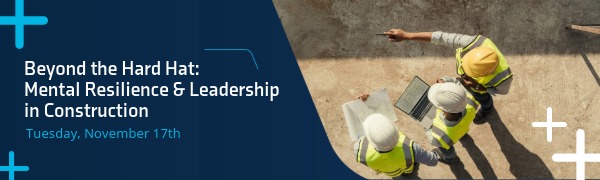
Beyond the Hard Hat: Mental Resilience-Leadership in Construction
About
REDUCE RISK, STRENGTHEN TEAMS, AND EQUIP LEADERS TO ADDRESS THE MENTAL HEALTH CHALLENGES IMPACTING TODAY’S JOBSITES You're invited to join us for BEYOND THE HARD HAT on Tuesday, November 17 at Baylor University in Waco, Texas. Construction leaders are facing unprecedented challenges related to workforce shortages, burnout, retention, loneliness, substance misuse, and employee well-being, all of which directly impact culture, productivity, safety, and financial performance. You already know the challenges. This event is focused on solutions. Beyond the Hard Hat brings together construction executives, industry experts, educators, and practitioners to provide actionable strategies that strengthen people, culture, and business performance. You'll leave with practical ideas you can implement immediately, meaningful industry connections, and a clearer understanding of both the human and financial impact of investing in your workforce. If you won't be there, who from your organization should be?
Schedule
Connect with industry leaders, sponsors, non-profit partners, and fellow attendees before programming begins.
Brett Harbin, Beyond the Hard Hat Contributor | Brad Anderson, IMA Financial Group The morning will begin by naming the urgency of the moment and setting a hopeful tone for the day. These opening remarks will frame the mental wellness crisis in construction, acknowledge the realities of addiction, recovery, homelessness, grief, and suicide, and invite attendees into a practical, leadership centered conversation about reducing risk, strengthening teams, and protecting people.
Matt Hollensworth, Austin Industries | Matthew Vereecke, Jordan Elizabeth Harris Foundation Leadership is one of the most important drivers of connection, purpose, and resilience inside construction organizations. This session explores how senior leaders can help shape cultures that notice people earlier, respond with care, and move before a crisis occurs. Drawing from construction leadership, chaplaincy, employee care, suicide prevention, and mental fitness strategy, the conversation will connect real stories with practical organizational action. Attendees will consider how leadership responsibility, human connection, mental wellness, and prevention can work together to strengthen safety, retention, engagement, and business performance. Learning objectives 1. Identify the role leaders play in creating connection, purpose, and resilience across construction teams. 2. Describe how prevention focused leadership can help organizations respond earlier to loneliness, stress, grief, addiction, and suicide risk. 3. Apply practical leadership behaviors that strengthen trust, employee care, and organizational follow through.
Coffee, refreshments, and conversation.
Eli Embleton, Zachry Construction | Monique Lewis, Next 2 Native, Inc. On a construction site, language is not a training convenience. It is safety infrastructure. When a crew member cannot fully understand a safety briefing, verify a procedure, or communicate a concern, the risk is real and measurable. This session combines an immersive experience that puts leaders in the shoes of their non-English-speaking crews with practical tools they can implement the next morning on their bilingual jobsites. Attendees will leave with specific techniques for verifying comprehension, improving communication across language gaps, and a personal Language-Safety Risk assessment for their company. Learning objectives 1. Recognize how language and culture influence trust, safety, retention, employee engagement, and mental wellness on construction jobsites. 2. Describe practical ways leaders can reduce communication barriers and create psychologically safer working environments. 3. Identify how language can become a leadership tool for connection, belonging, and stronger jobsite performance.
Vulnerable Conversations Malynda Dickinson, MYCON General Contractors | Brittney Hale and the Muckleroy & Falls Team | Megan Gandy and Michael Wright, TCS Mechanical Lunch will be provided. During this working lunch, attendees will continue the conversation through vulnerable leadership stories and table discussion. Construction leaders will share personal and organizational experiences with mental health, grief, loss, recovery, and resilience. This conversation is intended to show how courageous leadership and honest storytelling can strengthen culture, connection, and organizational wellbeing.
Lunch will be provided. Attendees are encouraged to continue conversations sparked during the morning sessions while connecting with industry leaders, sponsors, non-profit partners, speakers, and fellow construction professionals.
Dorsey Standish, Mastermind | Dr. Annie Ginty, Baylor University Burnout, distraction, stress, loneliness, and uncertainty affect performance both on and off the jobsite. This session brings together neuroscience, behavioral science, and practical application to help construction leaders understand what happens in the brain and body during chronic stress. Attendees will learn why resilience is not only a personality trait, but a trainable capacity that can be strengthened through small, repeatable practices. The session will connect brain science with everyday leadership demands, offering practical tools for improving focus, regulating stress, supporting recovery, and helping teams perform in high pressure environments. Learning objectives 1. Explain how chronic stress affects attention, decision making, emotional regulation, recovery, and performance. 2. Describe the connection between neuroscience, behavioral habits, resilience, and workplace wellbeing. 3. Identify small, repeatable practices leaders and teams can use to strengthen resilience and improve performance.
Ryan Fridborg | Jack Bruce | Craig Truitt | IMA Wellness, Benefits & Compliance Team | Daniel and Renee Mercado, Resource Employee Care What should happen when an employee discloses addiction, a mental health challenge, or a personal crisis? This practical session moves from good intentions to operational response. Attendees will examine the HR, compliance, benefits, wellness, and field support considerations that can arise when an employee asks for help. Topics include treatment leave, return to work considerations, EAP resources, privacy, supervisor response, benefits navigation, and the difference between a traditional 800 number model and onsite, relationship-based support. The session is designed to help leaders think through how policy, culture, and practical support must work together when the moment becomes real. Learning objectives 1. Identify the HR, compliance, benefits, wellness, and field support considerations that may arise when an employee asks for help. 2. Describe how treatment leave, return to work planning, EAP resources, privacy, and supervisor response can affect employee support. 3. Apply practical questions leaders can use to evaluate whether their current policies and resources are ready for a real employee crisis.
Coffee, refreshments, and conversation.
P. Michael Linzmaier, Construction Education Foundation | Marsha Williamson and Tim Grigsby, Dallas 24 Hour Club | David Schuermann and Eli Pagel, B&H Boring Construction leaders are facing a severe labor shortage while many individuals are searching for second chance employment, recovery, stability, and purpose. This session explores how employers, educators, workforce development organizations, recovery focused nonprofits, Dallas College, the Construction Education Foundation, Dallas 24 Hour Club, and B&H Boring are building pathways into sustainable construction careers. Attendees will hear how recovery and reentry programs can connect people with meaningful work, how construction companies can evaluate and support these hiring pathways, and why employment can create measurable value for workers, employers, families, and communities. The session will also examine retention, recruiting costs, workforce development, and the business case for investing in people who are ready for a second chance. Learning objectives 1. Learn how construction companies are successfully hiring individuals from recovery and reentry programs. 2. Understand the measurable impact these efforts have on retention and recruiting costs. 3. Explore why investing in people may be one of the most effective workforce strategies available today.
Keyan Zandy and Shelby McEntire, Skiles Group Construction companies do not lose great people because they lack opportunity. They lose them when burnout, stress, disconnection, and a lack of support begin to outweigh the reasons people want to stay. In this session, Skiles Group will share how Lean leadership, mental health initiatives, and people first practices can build a healthier and more engaged workforce. Through real world examples, attendees will explore how leadership behaviors, culture, process improvement, and employee support can work together to improve retention, strengthen trust, and create workplaces where people want to stay, grow, and contribute. Learning objectives 1. Identify how burnout, stress, disconnection, and lack of support can influence employee retention in construction. 2. Describe how Lean leadership and people first practices can strengthen engagement, trust, and team performance. 3. Apply practical ideas for improving retention, supporting mental health, and building a culture where people want to stay and grow.
Brad Anderson, IMA Financial Group The day closes by connecting leadership, culture, science, recovery, workforce development, and human connection. Attendees will be challenged to consider the human and financial cost of disconnection and leave with clear next steps they can take inside their organizations.
Speakers