
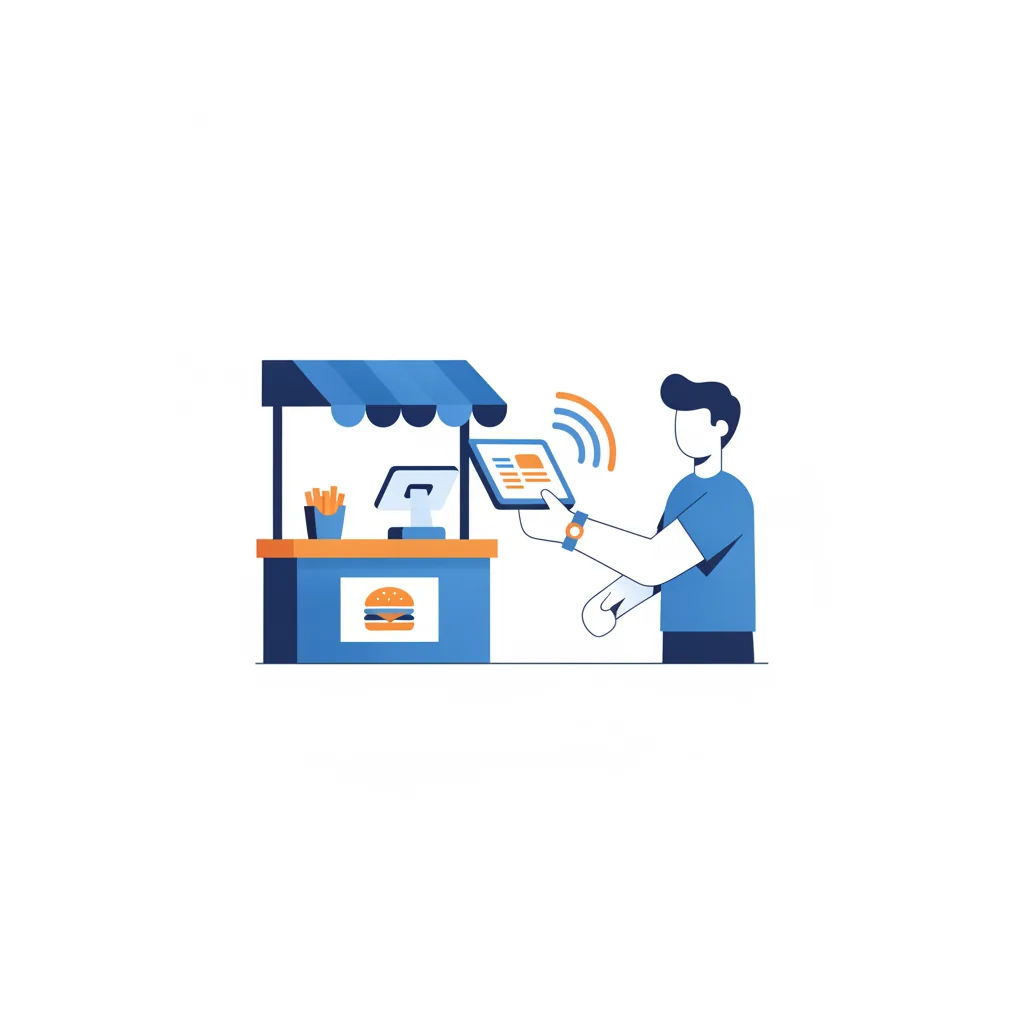
Coachella has run fully cashless since 2022, and the reason isn't novelty — it's revenue and throughput.[1] When a guest can tap a wristband or a phone instead of digging for cash, the line moves faster, the "sorry, cash only" sale never gets lost, and the average tab goes up. Across festivals, unifying vendors on one POS lifts guest spending 15–20%, with some events reporting far more.[1]
You don't need to be Coachella to capture most of that. This playbook explains how cashless festival POS works in 2026 — the vendor terminals, RFID wristbands, and the offline resilience that keeps money moving when the WiFi doesn't — and how to choose it without over-buying. It builds on our pillar, festival management software: the 2026 organizer guide.
Why cashless lifts spend
Three things happen when a festival goes cashless:
- Lines shrink. Tap-to-pay is faster than making change, so each stall serves more people per hour — the difference between a guest buying one beer and buying two.
- No dead-end sales. Every "I only have card" moment becomes a completed sale instead of a lost one.
- Bigger tabs. Not fumbling for exact cash nudges guests toward the add-on — the fries, the second round, the extra t-shirt.
The measured result: a 15–20% lift in guest spending when all vendors run on one unified POS, with events on dedicated festival systems reporting averages near 35% and outliers up to 70%.[1] On a festival doing $200,000 in on-site sales, even the low end is $30,000.
The vendor terminal problem
Here's where many festivals leave money on the table: every food truck and craft vendor brings their own Square account, their own reader, and their own cash box. Sales are scattered across a dozen merchant accounts, reconciliation is a nightmare, and the organizer has no real-time view of what's selling.
Unifying vendors on one POS fixes all of that — but only if the hardware cost doesn't punish you for adding stalls. That's the case for unlimited POS terminals with no per-device fee, which is how Addmi handles on-site sales: put a tablet or phone in every vendor stall, take cards and contactless taps everywhere, and watch it all roll into one dashboard alongside your ticketing. Because ticketing and POS share a system, gate revenue and vendor revenue reconcile into a single report — the foundation of the fast settlement we cover in festival vendor management software.
RFID wristbands: when they're worth it
For large multi-day festivals, RFID wristbands add speed and control: tap-to-enter access, reloadable cashless balances, and lost-wristband deactivation. The key technical advantage is offline processing — closed-loop RFID systems authorize transactions at the wristband, so sales continue even when cellular and WiFi fail.[1]
That resilience is not optional at scale. Glastonbury reportedly achieved 100% point-of-sale uptime by layering fiber, microwave radio, and satellite into a failover network.[1] For a mid-size community or food festival, RFID may be overkill — tap-to-pay cards and phones on tablet POS at each stall capture most of the spend lift without the wristband program. The honest question is scale: thousands of attendees across multiple days lean toward RFID; a one-day market does not.
What to check before you commit
- Offline behavior. Ask exactly what happens when connectivity drops mid-transaction and how sales reconcile when it returns.
- Per-device cost. If terminals cost per unit or per day, your hardware bill scales with your vendor count. Unlimited terminals remove that ceiling.
- Reconciliation speed. Can the system produce per-vendor sales instantly, or do you wait on token counts and manual tallies? Instant reports are what let you pay vendors the same week instead of two months later.[2]
- One report or many. On-site sales that live in a separate system from ticketing mean two reconciliations. One dashboard means one.
Cashless is the single biggest on-site revenue lever most festivals have, and the tooling got affordable in 2026. If you want vendor POS, ticketing, and reporting in one place, explore point of sale, see event ticketing, or return to the festival management guide.
Related guides
- Festival Management Software: The 2026 Organizer Guide
- Festival Vendor Management Software
- Festival Ticketing Software: Fees Compared (2026)
- Point of Sale · Event Ticketing
Sources
[1] Billfold, Oveit, Intellitix, Ticket Fairy — unifying vendors on one POS boosts guest spending 15–20%; Intellitix ITX POS reports average increases ~35%, some up to 70%; Coachella fully cashless since 2022; closed-loop RFID processes offline at the wristband so sales continue when networks fail; Glastonbury 2024 reportedly hit 100% POS uptime via fiber + microwave radio + satellite failover [2] Ticket Fairy — manual token counts and spreadsheets delay reconciliation and vendor payouts; integrated cashless systems produce per-vendor sales reports instantly, enabling faster settlement