
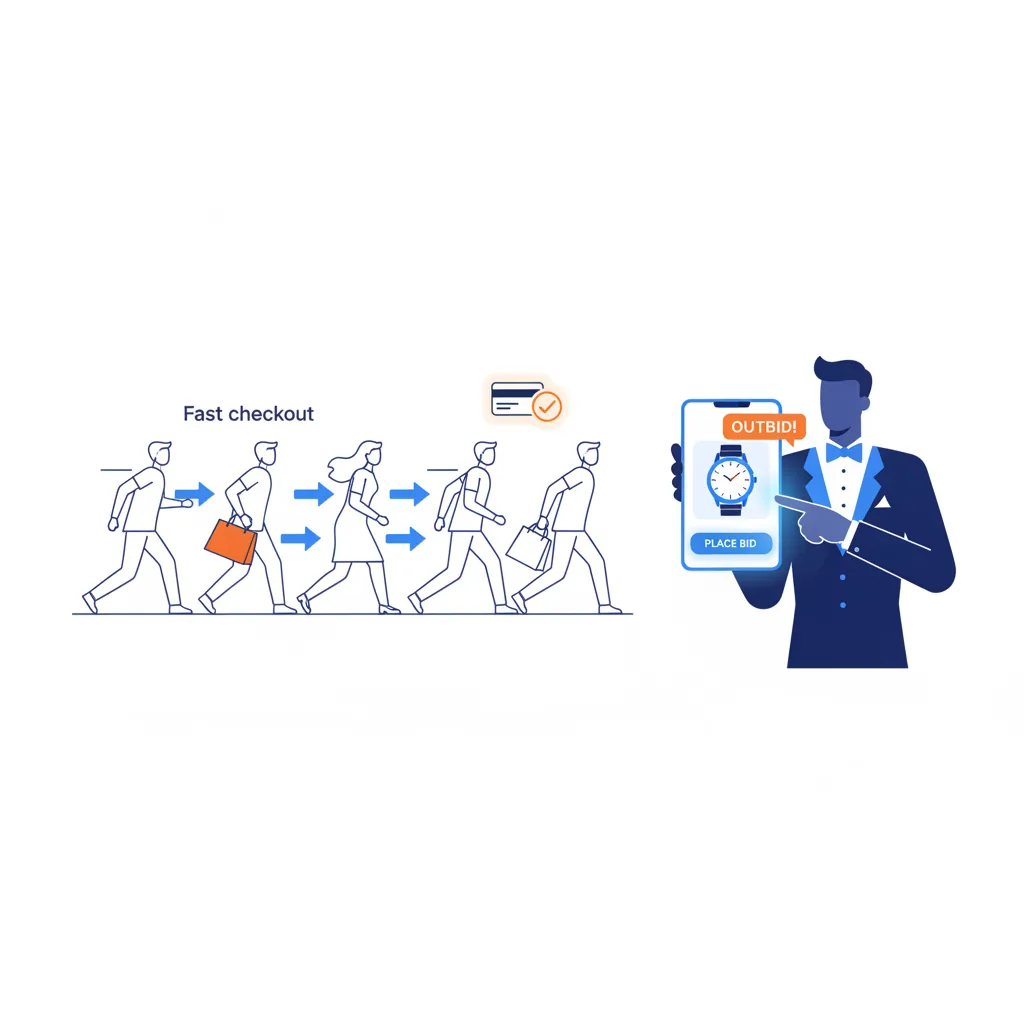
Two things sink a silent auction: paper bid sheets nobody updates, and a checkout line that snakes out the door while guests with cars waiting decide their winning bid was not worth the wait. Mobile bidding fixed the first problem years ago; the second is still where money leaks. This is the operator's comparison of nonprofit silent auction software in 2026 — and where your event platform fits around it.
This is part of our broader nonprofit fundraising event software guide, which covers the whole buying decision; here we focus on the auction and the checkout.
What silent auction software actually does
Silent auction software manages the auction end to end: item catalog, mobile bidding with watch lists and outbid alerts, mid-event donation appeals, single-transaction checkout, and post-event reporting.[1] The mobile-bidding part is now standard — guests bid from their phones, get outbid alerts, and the leaderboard updates live. The differentiators are fees, how fast checkout clears, and whether the data stays yours.
The trap is treating the bidding app as the whole event platform. It handles bids well; it usually does not run your ticketing, your bar, or your merch table — and that is where a lot of gala revenue and a lot of donor data lives.
The options, compared
Here is how the pieces fit for a gala with an auction. Addmi is listed first because it runs the event around the auction — tickets, entry, and the cashless checkout that the bidding tools lean on.
| Platform | Role | Fees | Donor data |
|---|---|---|---|
| Addmi | Event platform: ticketing, check-in, cashless POS for bar/merch/auction settlement | Flat 3% per ticket capped at $39; free plan, no contract | You own 100%, full export |
| GalaBid | Mobile bidding + raffles | No platform fee; optional donor tips[1] | Varies by platform |
| Handbid | Mobile bidding, established app | From ~$1,396 per event[1] | Varies by platform |
| BiddingOwl | Mobile bidding, budget option | Free in-person; ~5% of winning bids online[1] | Varies by platform |
The right combination depends on your auction size and how much you sell on the night beyond the auction. A bidding tool with "no platform fee" still leaves the bar, merch, and ticket checkout to something else — which is exactly the gap an event platform closes.
Checkout is where the night is won or lost
The most expensive moment of any gala is the line after the auction closes. Guests are ready to leave while a volunteer matches paddle numbers to credit cards by hand. The fix is to have the event platform already hold each guest's payment from check-in, so settling the auction tab and the bar tab is a single tap. Running cashless POS on the same system as your ticketing — unlimited terminals, no per-device fee — means the auction win, the drinks, and the merch all settle together and land in one donor record.
That speed is not just convenience. A typical auction draws a large share of first-time supporters, and whether they come back depends heavily on how the night ends — the retention math we lay out in donor retention after a fundraising event.
Don't lose the data to the auction app
Every bid and every checkout is a data point about a supporter. If it lives only inside a bidding app you rent, you lose the thread when you switch tools. Keep the event data — tickets, on-site sales, checkout — in a platform you control, with full export, so the auction becomes fuel for the next ask instead of a silo. That is the same data-ownership principle we cover in who owns your donor data.
Pick a mobile-bidding tool that fits your auction, then run the event around it on a platform built for fundraising galas — tickets, check-in, cashless checkout, and donor data in one place. That is how the auction raises the most and costs the least time.
Related guides
- Nonprofit Fundraising Event Software: The 2026 Guide
- Cashless POS for Nonprofit Galas
- Donor Retention After a Fundraising Event
- Point of Sale · Event Ticketing
Sources
[1] Bloomerang, Soapbox Engage, GalaBid, Handbid, BiddingOwl — silent auction software features and 2026 pricing (mobile bidding, per-event vs percentage vs tip-funded models)