
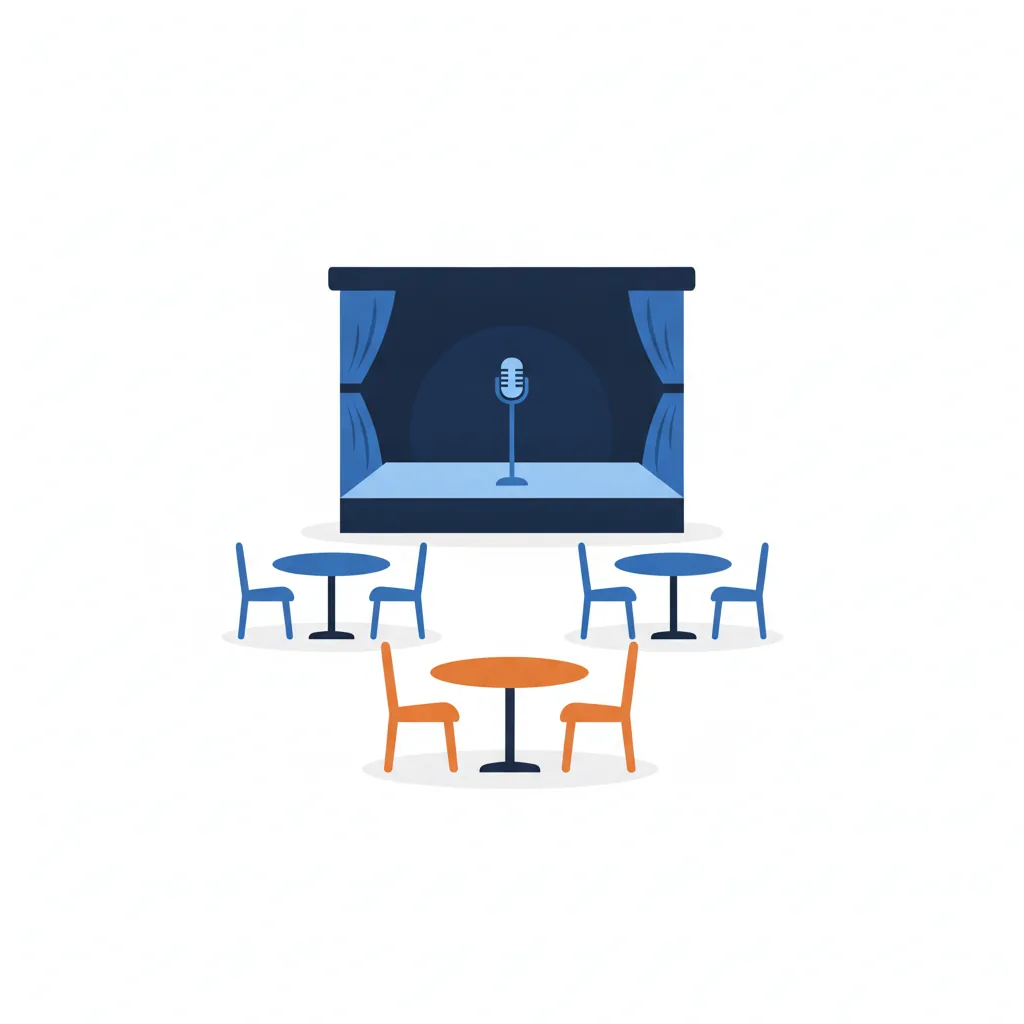
In a comedy club or a small music room, the seat is the product. A stage-side two-top on a Saturday headliner is worth far more than a stool at the back bar — and reserved seating lets you charge for the difference instead of leaving it on the table.
Build your room, tables and all
Recreate your floor in a seating chart: two-tops, four-tops, booths, bar seats, and any standing area. Buyers see the actual room and pick their table at checkout, so date-night pairs grab a two-top and groups book a booth together. The best seats sell first, which is exactly what you want on a hot show.
Tier the room and price the front
Stage-side is premium — price it that way. Set higher prices for front tables and booths, standard pricing for the middle, and a lower tier for the back or bar seating. Place holds on your best seats for VIPs, the artist's guests, or industry comps, and release them if they are unclaimed near showtime.
Mix reserved and general admission
Not every seat needs to be assigned. A common club setup is reserved tables and booths up front with general-admission standing or bar seating behind — and you can sell both in the same event. You capture the premium table revenue and still fill the room with walk-up GA.
Check in fast at the door
On a tight turnaround between shows, the door has to move. Each ticket carries its table and seat, and QR check-in shows the assignment as staff scan — so your host seats guests quickly and you get an accurate count for the fire marshal and the bar.
What it costs
Organizers pay the same flat 3% per ticket, capped at $39, with no monthly fee and no seating-map surcharge; attendees pay a small $0.40 per-seat reserved-seating service fee at checkout. No setup fee to build your room. See the pricing page and the complete reserved seating guide.